Sponsors

Tuesday, April 17, 2012

Google going to release low-cost tablets to popularise the Android


Google chief executive Larry Page believes Google's Android operating system will continue to flourish in the low-cost tablet segment. 

“We definitely believe that there is going to be a lot of success with the lower ends of the market, as well with lower-price products; that will be very significant, and definitely an area we think is important, and we're quite focused on, Google chief executive Larry Page said while responding to a question.

He also acknowledged that Google is facing a stiff competition in the tablet market, which is dominated by Apple's iPad. Page also highlighted Amazon's low-cost Kindle Fire tablet, which runs on Android platform but doesn't feature Google's services, like its search engine, e-mail and social network, with the tablet.

"There's also obviously been a lot of success on some lower-price tablets that run Android, maybe not the full Google version of Android," Page noted, referring to Amazon's tablet.

Google chief's comments come amid rumours of Google working on a self-branded Nexus tablet. According to reports, the Google tablet's release has been delayed till July.

Thursday, February 9, 2012

Google Privacy Policy, Important Things You Should Know


Did you notice lately that something was popping up on your favorite Google Search page telling that “we have changed something”. Yes Google has changed its privacy policy.
As per wiki “Privacy policy is a statement or a legal document that discloses some or all of the ways a party gathers, uses, discloses and manages a customer or client’s data.” While signing up for GMail you would have read, read and accepted the terms and conditions. Google has been introducing something new, now and then and we are excited when new stuffs plunge.Because we are getting more of something for FREE!
But there is no free lunch. Google keeps a track of whatever you search, see, send etc to provide more relevant ads. This post is not going to explain you the new privacy policies because Google itself has designed a elegant page to explain them. I shall explain you as why you need to know about the policies.
Google search doesn’t work the same way for everyone. The search displayed varies depending upon various factors like your location, personal information, previous searches etc. Similarly Google search resultsdiffer the your account logged in and logged out. Youtube shows personalized recommendation based on what you have seen before. Google language preference as are saved form your browser cache.
Gmail shows relevant ads based on the content of the mail you sent/received. Google maps uses your current location show accurate distances on maps. So it is important to know what kind of information is used by Google and why is it done so.
Is there any option to prevent my data being used? Yes Google provides few options to opt out their services
  • Google Dashboard reveals the information tied to various Google services
  • Google allows to opt out of relevant ads display

Read New Google Privacy Policy

A simple video to explain Google privacy policy.
Thanks for reading and do share your views about this article with us in the comment box below.
via [DailyTUT]

Unsung Heroes of Linux


Unsung Heroes of Linux
Everyone knows and loves Linus Torvalds, the creator of Linux. Mark Shuttleworth, the creator of Ubuntu Linux, is pretty famous. Richard Stallman, the founder of the Free Software Foundation and creator of the GPL, is equal parts famous and infamous. But surely there is more to Linux and Free/Open Source software than these three. And indeed there are thousands upon thousands of people toiling away fueling the mighty FOSS engine; here is a small sampling of these important contributors who make the FOSS world go 'round.

Lady Ada, Adafruit Industries

Lady Ada is Limor Fried, electronics engineer and founder of Adafruit Industries. My fellow crusty old-timers remember way way back when Radio Shack was actually about do-it-yourself electronics hacking instead of the passive brain-decay of cell phones and big-screen TVs.
Adafruit Industries is a welcome replacement for us weirdos who like to take things apart and figure out how they work. Adafruit Industries sells Arduino boards, kits, and related parts and tools. Even more valuable is the wealth of well-illustrated tutorials. You can start from scratch, with no electronics knowledge, and get a solid fundamental education in a few days' of reading and hands-on hacking.

Dr. Tony Sales, Vinux

Linux and FOSS should be leading the way in pioneering accessibility for Linux users with disabilities, because good design for disabled people is good design for everyone. One of the best accessibility projects is the Vinux distribution, which aims for out-of-the-box accessibility for visually impaired Linux users, including installation. This is a lot harder than it sounds — try it for yourself.
If you are looking for a way to make a significant contribution to Linux and to tech, consider the field of accessibility. None of us are getting any younger or healthier.

Dick MacInnis, Dream Studio

Dick MacInnis is a musician, composer, and all-around nerd. He created and maintains Dream Studio, a sleek multi-media Ubuntu spinoff for musicians, photographers, movie makers, and all creative artists. It's a super-nice customization that stays out of your way and lets you get down to business.

Akkana Peck, Rennaissance Nerd

Akkana is one of my favorite people. She used to race cars and motorcyles, flies little radio-controlled airplanes, is into astronomy, mountain biking, kayaking, photography, and all kinds of fun stuff.
Akkana is a versatile and talented coder who has worked at cool-sounding places like Silicon Graphics and Netscape, and currently works for a startup doing embedded Linux and Android work. Akkana wrote the excellent Beginning GIMP book and a bunch of first-rate Linux howtos for Linux Planet. She also writes all kinds of amazing technical articles on her Shallow Sky blog. What earned Akkana a place on this list is her generosity in sharing knowledge and helping other Linux users. Learning, doing, and sharing – isn't that what it's all about?

John Linville, Linux Wireless

The Linux Wireless project is a model that more FOSS projects should emulate. Back around 2006 or so kernel developer John Linville and his team took on the task of overhauling the Linux wireless stack. It was a mess of multiple wireless subsystems (Wavelan, Orinoco, and MadWifi). Drivers were all over the map in what functions they handled, sometimes conflicting with the kernel.
In just a couple of years, without fanfare, it was all significantly streamlined and improved, with a common driver base (mac80211) and assistance for vendors and end users. There are still some odds and ends to be worked out, but it's at the stage where most wireless network interfaces have plug-and-play native Linux support.

Jean Tourillhes, Wireless Tools for Linux

Jean Tourillhes was the core maintainer and primary documenter of the old Linux WLAN drivers and userspace tools. If it were not for Mr. Tourillhes wi-fi on Linux would have been brutish and nasty. (WLAN and wireless-tools have been replaced by the new Linux Wireless project.)

JACK

JACK is not a person, but the JACK Audio Connection Kit for Linux. JACK is a professional-level audio server for connecting audio software and hardware, like a switchboard, and brings professional low-latency audio production to Linux. Paul Davis was JACK's original author, and Jack O'Quin, Stephane Letz, Taybin Rutkin, and many other contributors have all added essential features and supported JACK in multiple important ways.

Jon Kuniholm, The Open Prosthetics Project

Jon Kuniholm, an Iraq war veteran who lost part of his arm in the service, is also a biomechanical engineer devoting his talents and open source methods to improving prosthetic limbs, which have advanced far more in cost than in functionality. Decades-old technology shouldn't be priced like it's cutting edge; the project aims to improve functionality and appearance, and make advanced designs available to anyone who wants them.

Linux OEM Vendors

There are doubtless more than the few that I know about, so please feel free to plug your own favorite independent Linux vendor in the comments. System76 and ZaReason are my favorites because they are true independent mom-and-pop shops that sell desktop Linux PCs without drama or excuses, they offer first-rate customer service and customizations without whining, and don't need a year to retool for a new Linux release.
Some other notable Linux OEMs:

Greg Kroah-Hartman, Linux Driver Project

Greg Kroah-Hartman launched the Linux Driver Project a few years ago to help vendors get drivers for their devices into the mainline kernel. The project has been a huge success, demonstrating yet again (as with Linux Wireless) that lending a friendly, helpful hand works better than yelling.

Denise Paolucci and Mark Smith, Dreamwidth

Dreamwidth Studios is a fork of LiveJournal by former LiveJournal staffers Denise Paolucci and Mark Smith. It is unusual for a FOSS project as it has a majority of women developers, and the whole community is known for being friendly and helpful to newcomers.

OpenTox, Cast of Thousands

The OpenTox project, led by coordinator Barry Hardy, is a global data-collection and analysis framework that aims to replace animal testing for chemical interactions and toxicity with predictive computer analysis.

Ken Starks, the Helios Initiative

Ken Starks does the kind of hard, hands-on advocacy that delivers the best results: rehabbing computers with Linux and giving them to children who can't afford to buy their own computers. Since the Helios Project moved into spiffy new quarters in Taylor, Texas they've expanded to building a computer lab and teaching classes.

Walter Bender, Sugar

Walter Bender was one of the chief designers of Sugar, the computer interface for young children that was originally created for the One Laptop per Child XO-1 netbook. When OLPC allowed as how they were maybe going to allow Windows XP on OLPC netbooks, Mr. Bender is credited by some for saving Sugar by leaving OLPC and founding Sugar Labs to continue its development independently. Sugar is included in a number of Linux distributions including Fedora, Debian, and Mint, and Sugar on a Stick is a complete bootable on a USB stick.

Yes, There is a Moral

There is a moral to this story, and that is that Linux is more than giant wealthy companies, or glamorous celebrity geeks, or an unruly rabble. (Three cheers for unruly rabble!). It is fundamental building blocks that anyone can learn to use to make the world a little bit better.
We know that there's more than a few unsung heroes and heroines of Linux and free software, though. Who do you consider a hero, and why? Stay tuned, we'll have more soon.

via [Linux.com]

Wednesday, February 8, 2012

Finally Volunia Relased


Google might be synonymous with the word search in most of the world, but that hasn’t dissuaded others from bringing new search engines to the market, usually aiming to innovate in an area where Google has somehow let up its guard. Volunia, launched this week, promises to help searchers with three distinguishing features:
  1. High level site previews in search results
  2. A multimedia search within a site function
  3. A social layer which, among other things, allows Volunia users to share information and connect to one another
My sense is that it is the social layer which will be most appreciated by Volunia users. Let’s look at each.

Volunia Search Result Previews Offer A “Fly-Over” Site View

During his launch presentation, (in Italian, starts at 40 minute mark) Volunia founder Massimo Marchiori described search users as similar to chickens, trapped in cages and incapable of flying.
Users have been forced to choose search results by consulting one of those classic 10 item title, summary and link lists for too long. Wouldn’t it be nice if users were freed from their cages, and not only, were actually able to fly over a site, viewing a visual or a grid map, before committing to visit it?
Volunia, perhaps from volare, to fly, offers two types of high level site map previews, potentially freeing users from commitment tyranny. The first type, a visual map, aims to group areas of a site together in neighborhoods.
Figure 1: Volunia search result site fly-over: visual map
The second site preview map is in the form of a grid, reminiscent of computer folders. The expectation is that this format will be more useful to people searching from devices with small displays, like smartphones.
Volunia search result site fly-over: grid map
Figure 2: Volunia search result site fly-over: grid map
Interactive drill-down versions of the maps are also available from a Volunia menu bar which is visible while navigating a site. Site owners can improve the maps using a Volunia provided sitemap editor.
Volunia sitemap editor
Figure 3: Volunia sitemap editor
Result previews aren’t exactly a new concept – Ask.com introduced their binoculars feature in 2004.
Where Volunia differs is in their choice to show a site map preview instead of a page preview. Many searches are indeed navigational in nature, one reason Google provides their sitelinks for some queries.
Volunia may be on to something.

Volunia Wants To Surface Multimedia Otherwise Hidden In A Site

Initially the primary focus in Web search was on textual documents, particularly the html kind, rich in semantic structure with their glorious title, heading and paragraph tags.
Oh, I didn’t mention the links between documents, did I? Other Web content formats, from PDF files to images and then video posed much greater obstacles to search engine indexing for a number of reasons.
Today, major search engines like Google offer navigation links to enable a user to search just images or video.
Ambitious searchers can usually find an advanced search syntax page which allows them to limit their searches to specific sites and file types, but for the most part major search engines have taken the “don’t make me think” approach, providing searchers with a blend of media types in search results, what Google calls universal search.
Volunia on the other hand wants to make it easy for a user to discover the multimedia richness hidden in sites like NASA by providing a very visible multimedia site search filter.
Volunia's multimedia search filter
Figure 4: Volunia's multimedia search filter

The Web Has Come Alive, Says Volunia: Volunia’s Social Layer

Volunia’s second area of innovation is in adding a social layer to their search results and subsequent website navigation by the Volunia user.
In search results, users can select a site based on what other Volunia users are viewing right now. Volunia displays the number of page and site visitors.
Volunia visitors currently viewing the page and the site
Figure 5: Volunia visitors currently viewing the page and the site

It isn’t immediately clear how useful this feature will prove to be: after all, even if we want to follow the “wisdom of the crowd”, there’s no way to know if the site’s current visitors from Volunia are actually happy with their choice, nor would it be clear to what extent one searcher’s expectations for a page align with those already visiting that page.
The same visitor counts are also available as layers on the site navigation maps.

Seek & Meet: Interact With Other Volunia Users

What might arguably be Volunia’s greatest innovation is in letting fellow search travelers to a page interact with each other, what Volunia calls seek and meet, a feature which feels very reminiscent of Google’s now closed Sidewiki, albeit with two key differences. The first is that users can interact in realtime.
Volunia seek and meet interactive site chat
Figure 6: Volunia seek and meet interactive site chat
This birds of a feather real time information sharing might prove useful in a number of situations where people are looking for pre- and post- purchase information.
In the pre-purchase phase, a searcher might want to interact with other users to better understand the product or service they’re considering, not to mention to discover what alternatives others are considering.
Sometimes, it’s nice just to have confirmation that we’re making the right choice. In the post-purchase phase, searchers might be able to resolve support issues by consulting with other searchers – potentially reducing a company’s support costs while providing interactive peer to peer support 24 hours a day.
Each Volunia user is able to fill in a personal profile, much like any social network. The matchmaking possibilities are clearly endless, but I suspect it would be best if I don’t go there….
It isn’t rare to see glowing online reviews written by someone with a connection to a product or service, and equally harsh reviews from competitors or ex-employees with an ax to grind. It doesn’t take much to imagine people attempting to scam the system by introducing fake search users to interact with other searchers.
It remains to be seen if “seek and meet” really is something people will take to. Real time search collaboration will well depend on a critical mass of socially oriented searchers congregating on the same sites at the same time, no easy feat for a niche search engine.
Site owners will undoubtedly be pleased with the second apparent difference to Google’s Sidewiki: commenting can be disabled if desired, something Google didn’t allow.

Volunia, The Company, And A Few Volunia Tidbits

According to data published by Italian business paper Il Sole 24 Ore, Volunia was founded in 2008 by Massimo Marchiori and entrepreneur Mariano Pireddu, with Pireddu providing €2 million in funding to date. You might not immediately recognize Massimo Marchiori’s name, yet as an academic Massimo has been working on the theoretical issues of Web search for years.
His seminal 1997 paper, The Quest for Correct Information on the Web: Hyper Search Engines, would serve as one of the sources of inspiration for two Stanford students, Sergey Brin and Larry Page, who would acknowledge Marchiori’s contribution to their own work, Google.
During Volunia’s beta phase, over 100,000 people are being invited to become “power user” beta testers. The Volunia user interface is in 12 languages but Marchiori said during the launch presentation that the actual index coverage isn’t limited to those languages.
The Volunia team has ideas for Volunia “extensions”, i.e. new functionality, which will be added to the core, the hard part which has already been done. Advertising will be added to the service.

Marchiori Says Social Needs To Emerge In Search

In an introductory video, Massimo notes that Volunia stems from an idea he’s harbored for several years, an idea for a “different perspective of what the search engine of the future should be”. In the Il Sole 24 Ore report Massimo said “The Web is a living place, there’s information, but there’s also people. The social dimension, already present, just needs to emerge”.
Bing, which started incorporating social signals from Facebook in 2010, and Google, which launched its social search in 2009, would probably both argue that the social dimension to search has already emerged. So would upstart blekko and to a lessor degree, the RussianYandex.

Armani, Chianti, Ferrari… And Volunia

Volunia is based in Italy, not in Silicon Valley as one might have guessed. Italy actually has a history of search engine excellence. Google may well power most Italian portals today, but the talent behind a now defunct Italian search engine, Arianna, led Ask.com to locate its European R&D headquarters in Pisa.

The Reality Check: Search Isn’t Easy: Volunia Faces Many Challenges

The basic task of a search engine, finding, indexing and retrieving the world’s information, is a complex one. The size of the Web is immense. There’s the problem of searcher intent: we know what we’re looking for when we type a brief search query, but those few words are often open to multiple interpretations.
Google has conditioned searchers to expect lightning speed and mostly fresh and relevant results. Volunia will have to perform well on all these fronts and navigate thorny issues ofprivacy.
Many start-ups have nonetheless tried to compete with Google and Bing. Some, like Cuil, ran out of funding before gathering significant market share; others like blekko, with far greaterfunding, are still working hard to win over hearts and minds. Whether Volunia will be able to pull this off remains to be seen.

Kick The Volunia Tires Yourself!

Volunia has a sign-up form for those who want to try it out. Go kick the tires and support the underdog! From messages that I’ve seen on Friendfeed, Twitter and Facebook, very few have actually had a chance to actually use Volunia, credentials are only dribbling out, most likely in an attempt to avoid problems similar to what Google faced when they first opened Google Analytics to too many people at once. I based the considerations made (and images) in this article on demo videos released by Volunia in order to give you a preview of what to expect.

Friday, January 27, 2012

Apple reigns the quarter but Samsung reigns the year

According to the report from the strategy analysis states that the iPhone family overtook Samsung with 24 percent of the market share in the fourth quarter. During this time, Apple's global smartphone shipments grew by 128 percent and it shipped 37. million phones.


Over the year, all global smartphone shipments increased by 54 percent and in the fourth quarter reached a record number of 155 million phones shipped.

"While Apple took the top spot in smartphones on a quarterly basis, Samsung became the market leader in annual terms for the first time with 20 percent global share during 2011," Strategy Analytics Executive Director Neil Mawston said in a statement.

When all numbers were tallied at the end of the year, the two companies were neck and neck. Samsung shipped 97.4 million units with 19.9 percent of the market share, and Apple shipped 93 million units with 19 percent of the market share.

"With global smartphone shipments nearing half a billion units in 2011, Samsung is now well positioned alongside Apple in a two-horse race at the forefront of one of the world's largest and most valuable consumer electronics markets," Mawston said.

The next biggest shipper was Nokia with 77.3 million smartphones shipped and 15.8 percent of the market. However, "Nokia's global smartphone market share halved from 33 percent in 2010 to 16 percent in 2011," Strategy Analytics' Tom Kang said. "A lackluster touch-screen smartphone portfolio and a limited presence in the huge United States market caused Nokia's shrinkage last year."

"Nokia's partnership with Microsoft will be very much in focus during 2012," Kang added. "The industry will be watching closely to see how swiftly the two companies can expand in the high-value 4G LTE market that is rapidly emerging across the United States, Japan and elsewhere."be watching closely to see how swiftly the two companies can expand in the high-value 4G LTE market that is rapidly emerging across the United States, Japan and elsewhere."

Friday, January 6, 2012

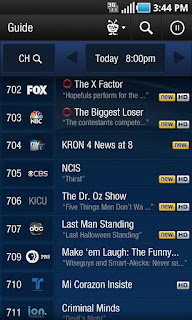
TiVo® DVR apps released in Android Market Today


TiVo DVR apps

TiVo® DVR apps released today in the Android Market and gets the 8/10 rating and the initial users gave 5/5 rating in the user reviews section. It allows the user to browse the channel guide without interrupting the show, viewing shows up to 14 days in advance, Scheduling TV show/movie recordings and ongoing (Season Pass®) recordings and lot of features. Download the app from here

 
Reviews from Android Market

RATING: 8 / 10
UPDATED: January 6, 2012
CURRENT VERSION: Ver.1.5.1.35 (1a)
REQUIRES ANDROID: 2.1 and up
CATEGORY: Entertainment
INSTALLS: 1 - 5
SIZE: 15M
PRICE: Free
CONTENT RATING: Everyone
TiVo DVR apps

TiVo DVR apps

TiVo DVR apps

TiVo DVR apps
Follow our blog, to get the latest details about the Android apps.

Thursday, January 5, 2012

Gingerbread Ranks First in Android Distribution

According to the Google's Android developers report, the android users are classified according to their platforms and their distribution is released on their official site.

Gingerbread ranks first in android usage

Based on the report, Cupcake (Android 1.5), which comes under the API Level 3 contributes to the third minimum where the new Ice Cream Sandwich (Android 4.0, 4.0.2, 4.0.3) uses the API Level of 14 and 15 improves their ranking to second lowest with in few days after their release.

Among the entire list Android versions 2.3 - 2.3.7 Gingerbread tops in the distribution with 54.9 % for (Android 2.3.3 - 2.3.7) and Android 2.2 Froyo holds the second maximum distribution with 30.4%.

As per the distribution, Ice Cream Sandwich is having a good future in the android market.

Tuesday, January 3, 2012

New Year Resolution for the twitter should be "I won't crash again!"


Twitter crashed in the New Year Celebrations of 2012. Twitter, one among the popular social networks, got crashed after 16000 new tweets per second. Most of the users got the error message stating “Twitter is over capacity” when trying to access the twitter site on 1st January of 2012. It had a major impact in Japan initially, later the website recovered. After the New Year arrival in the different regions of the world, twitter server is crashing accordingly and recovered finally.

New Year Resolution for the twitter should be "I won't crash again!"

Thursday, December 29, 2011

Huawei Honor Review

Huawei Honor is getting more famous these days, even it is from Huawei, a Chinese company.


Quick Overview


GENERAL2G NetworkGSM 850 / 900 / 1800 / 1900
3G NetworkHSDPA 900 / 1700 / 2100
Announced2011, September
StatusAvailable. Released 2011, December
BODYDimensions122 x 61 x 11 mm
Weight140 g
- Touch-sensitive controls
DISPLAYTypeTFT capacitive touchscreen, 16M colors
Size480 x 854 pixels, 4.0 inches (~245 ppi pixel density)
MultitouchYes
SOUNDAlert typesVibration, MP3 ringtones
LoudspeakerYes
3.5mm jackYes
MEMORYCard slotmicroSD (TransFlash) up to 32GB
Internal1 GB storage, 512 MB RAM, 4 GB ROM
DATAGPRSClass 10 (4+1/3+2 slots), 32 - 48 kbps
EDGEClass 10, 236.8 kbps
SpeedHSDPA 14.4 Mbps, HSUPA 5.76 Mbps
WLANWi-Fi 802.11 b/g/n, DLNA, Wi-Fi hotspot
BluetoothYes, v2.1 with A2DP, EDR
USBYes, microUSB v2.0
CAMERAPrimary8 MP, 3264x2448 pixels, autofocus, LED flash
FeaturesGeo-tagging, HDR
VideoYes, 720p@30fps
SecondaryYes, 2 MP
FEATURESOSAndroid OS, v2.3 (Gingerbread), upgradable to v4.0
ChipsetQualcomm MSM8255T Snapdragon
CPU1.4 GHz Scorpion
GPUAdreno 205
SensorsAccelerometer, gyro, proximity, compass
MessagingSMS(threaded view), MMS, Email, Push Mail, IM
BrowserHTML, Adobe Flash
RadioFM radio
GPSYes, with A-GPS support
JavaYes, via Java MIDP emulator
ColorsGlossy Black, Textured Black, Elegant White, Vibrant Yellow, Cherry Blossom Pink, Burgundy
- Active noise cancellation with dedicated mic
- SNS integration
- Google Search, Maps, Gmail, Talk
- MP3/WAV/eAAC+ player
- MP4/H.263/H.264 player
- Organizer
- Document viewer
- Photo viewer/editor
- Voice memo/dial/commands
- Predictive text input
BATTERYStandard battery, Li-Po 1900 mAh
Stand-by
Talk timeUp to 10 h
MISCSAR US0.39 W/kg (head)     0.63 W/kg (body)    
SAR EU0.38 W/kg (head)     0.49 W/kg (body)

In addition to all these features, there is an option of updating the operating system to Ice Cream Sandwich (Android 4.0).